Unlock Timeless Texture: Postage Stamps Digital Paper Backgrounds
There is a specific kind of nostalgia that comes with the tactile feel of old mail—the rough edges of a torn envelope, the faded ink of a postmark, and the intricate designs of vintage stamps. As creators, we often chase that authentic, lived-in look to give our projects depth. That is exactly where the Postage Stamps Digital Paper Backgrounds collection steps in. This isn't just a set of generic textures; it is a curated library of history and character, designed to bring a tangible sense of realism to your digital and physical creations.
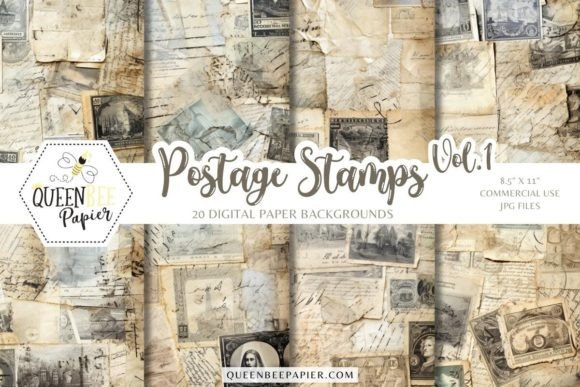
The visual personality of this bundle is defined by its versatility within the "grunge" and "vintage" aesthetic. You are not getting sterile, clean white backgrounds. Instead, you are receiving 20 distinct variations of aged paper, complete with realistic creases, stains, and the unmistakable borders of postage stamps. The color palette leans heavily into earth tones—sepia, ochre, muted creams, and oxidized greens—which makes them incredibly easy to integrate into almost any color scheme. Whether you are working on a dark academia mood board or a rustic farmhouse style, these textures provide the perfect foundation.
Real-World Applications for Designers and Makers
Understanding where to apply these Postage Stamps Digital Paper Backgrounds is key to maximizing their value. For the graphic designer, these files act as a powerful layering tool. In editorial design, for example, using a flat white background can sometimes feel sterile. By clipping a section of these digital papers behind a pull quote or a sidebar, you instantly create visual hierarchy and a focal point. It adds a layer of sophistication that plain typography cannot achieve on its own.
For the entrepreneur or small business owner, the applications are incredibly practical. If you are in the e-commerce space, consider how these textures influence your packaging design. A jewelry brand or a soap maker could print these backgrounds onto kraft paper or sticker sheets to create branded packaging tape or thank-you cards. It signals to the customer that care went into the presentation, elevating the perceived value of the product before they even open it.
- Scrapbooking and Junk Journalling: These are ideal for creating pockets, tip-ins, or base layers for mixed-media art.
- Printable Decorations: Use them to create party banners, cupcake toppers, or wall art with a vintage flair.
- Stickers and Tumblers: The high-resolution (300dpi) ensures that when you print these onto vinyl for mugs or laptop decals, the texture remains crisp and doesn't pixelate.
- Social Media Graphics: Use them as a background texture for Instagram quotes or story headers to break the monotony of standard digital feeds.
Integrating Texture into Brand Identity
When building a brand identity, consistency is everything. However, consistency does not mean uniformity; it means having a cohesive visual language. If your brand voice is storytelling, heritage, or authenticity, these textures are a strategic asset. Imagine a travel blogger using these backgrounds to frame their photography. The postage stamp motif reinforces the theme of movement and exploration without needing a single word of explanation.
From a marketing perspective, using textured backgrounds can significantly impact audience engagement. In a sea of flat, minimalist web design and social media graphics, a textured image stops the scroll. It adds a sensory element to the visual experience. People naturally want to reach out and touch things that look tactile. By using the Bundle of 20 Postage Stamps Digital Paper Backgrounds, you are leveraging that psychological trigger to keep eyes on your content longer.
It is also worth noting how these backgrounds interact with typography. Because the textures are "grunge" and detailed, they serve best as a backdrop for bold, clean type. If you are overlaying text, pair these backgrounds with a sturdy sans serif font or a heavy serif font. A delicate script font might get lost in the noise of the paper texture. However, if you are using the paper as a physical print—like a greeting card—you can write directly on it with metallic pens or markers, where the texture of the paper actually helps the ink grip and stand out.
Practical Considerations for Production
Before you download and start designing, there are a few technical aspects to keep in mind to ensure a smooth workflow. The files are provided in JPG format at 8.5" x 11" inches (2550px x 3300px). This standard size makes them perfect for home printing or standard commercial print runs without needing to resize or worry about resolution loss.
One specific detail to note is that these files are NOT seamless. This is a crucial distinction for anyone planning to use them for large-scale web design backgrounds. You cannot simply tile these images to fill a screen without visible, jarring seams. However, for the intended uses—stickers, journals, cards, and spot graphics—this is irrelevant. In fact, the non-seamless nature often adds to the realism, as it looks like a specific piece of cut paper rather than a repeating pattern.
As you evaluate your project fit, consider the "volume" of the texture. If you are designing a logo, a heavy grunge texture is rarely appropriate as it complicates readability at small sizes. These are best used as design assets for backgrounds, borders, and collage elements. When testing font pairings, print a test page or view it on a high-quality monitor. Check the contrast between your text and the paper texture. You may need to add a slight drop shadow or a semi-transparent overlay behind your text to ensure the message is legible.
Ultimately, this collection is about adding soul to your work. It is for the creator who wants to move away from the generic and embrace the imperfect beauty of the past. Whether you are a hobbyist creating a memory book or a professional designer crafting a campaign, the Postage Stamps Digital Paper Backgrounds provide a reliable, high-quality foundation for your creative vision.